


Review: Code Geass: Lelouch of the Rebellion
 When it comes to anime shows about large robots fighting, you won't be looking around the genre long before you come across Code Geass. In fact, if you're looking for recommendations in general then this is a name you're likely to hear even before someone tells you to watch Death Note or Fullmetal Alchemist. Code Geass is already a classic, and it's one you probably won't want to miss.
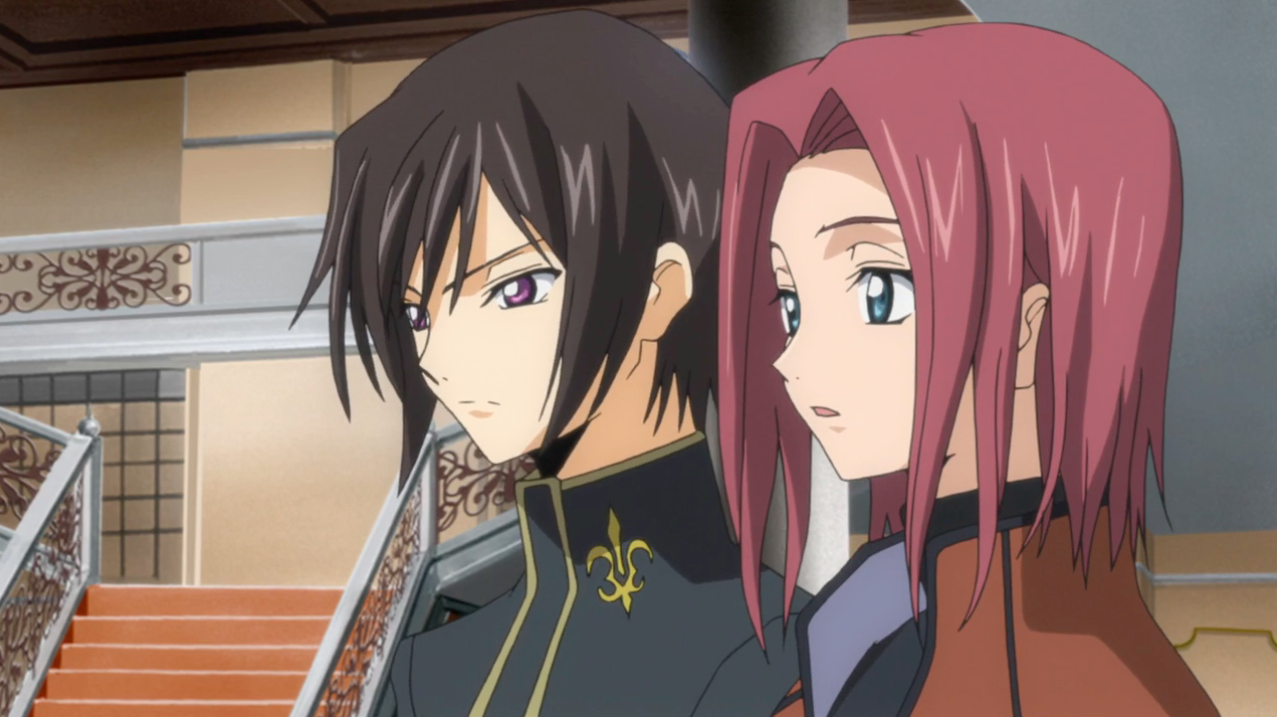 On paper, there are so many things about Code Geass that shouldn't work. Its elements don't really blend together, and the mix of high school drama and 'liberation of Japan via use of mechas' is a strange (yet still slightly predictable) combination. Things that shouldn't be connected are, and outside the classroom the same characters are fighting each other in a war for freedom. Admittedly Code Geass took me a while to get into, and in the first few episodes the narrative easily gets lost in confusing politics and military strategy.
 Half way into series one and I found myself drawn in to both the Code Geass world and the characters that inhabit it. The battle scenes become hypnotic, and the high school antics serve as entertaining interludes, although I'm sure that many hardcore fans would disagree with me that these are the best bits of the show. But it's that variety that ultimately holds everything together, and seeing characters that were fighting each other in one episode make a giant pizza together in the next may have been odd, but it certainly entertained me.
These were the kind of elements that meant towards the end of the show's two series run I was hooked. Whilst it's debatable which series is superior, it's the second that I enjoyed from start to finish – even though it's far from perfect. After a climactic end to series one the status quo is conveniently restored when the characters all have their memories altered, and whilst Code Geass R2 succeeds in entertaining, it doesn't immediately follow through on any of the issues you might want it to.
 However, whilst I was happy to forgive some of the show's flaws, and overlook others, it does commit a few crimes that are harder to ignore. Lelouch's Geass power – which allows him to command anyone to do his bidding – is certainly interesting, but the actual mechanics of how it works are always vague. Remember how in Death Note Light Yagami does all these experiments to ascertain the true power of his demon notebook? Well that's because Death Note is better written. I want to know what happens when Geass is used to command the impossible, something contradictory/open to interpretation, or something someone doesn't already know how to do. It's never quite made clear exactly what Lelouch can and can't achieve using his powers. Because of this its applications feel at best unpredictable, and at worst acts of Deus ex machina.
Still, especially in the later episodes, Geass is used in some interesting and creative ways. Unfortunately, the show's logic that dictates success and failure isn't quite as realistic as it should be, and many of Lelouch's plans work out when perhaps they shouldn't have. In particular the final episode, which I know many people think is great, left me unsatisfied. I know his schemes are meant to show us that he is a tactical strategist capable of out-thinking his enemies, but the plans he sets in motion often include so many elements completely out of his control, and when they succeed it feels like sheer luck.
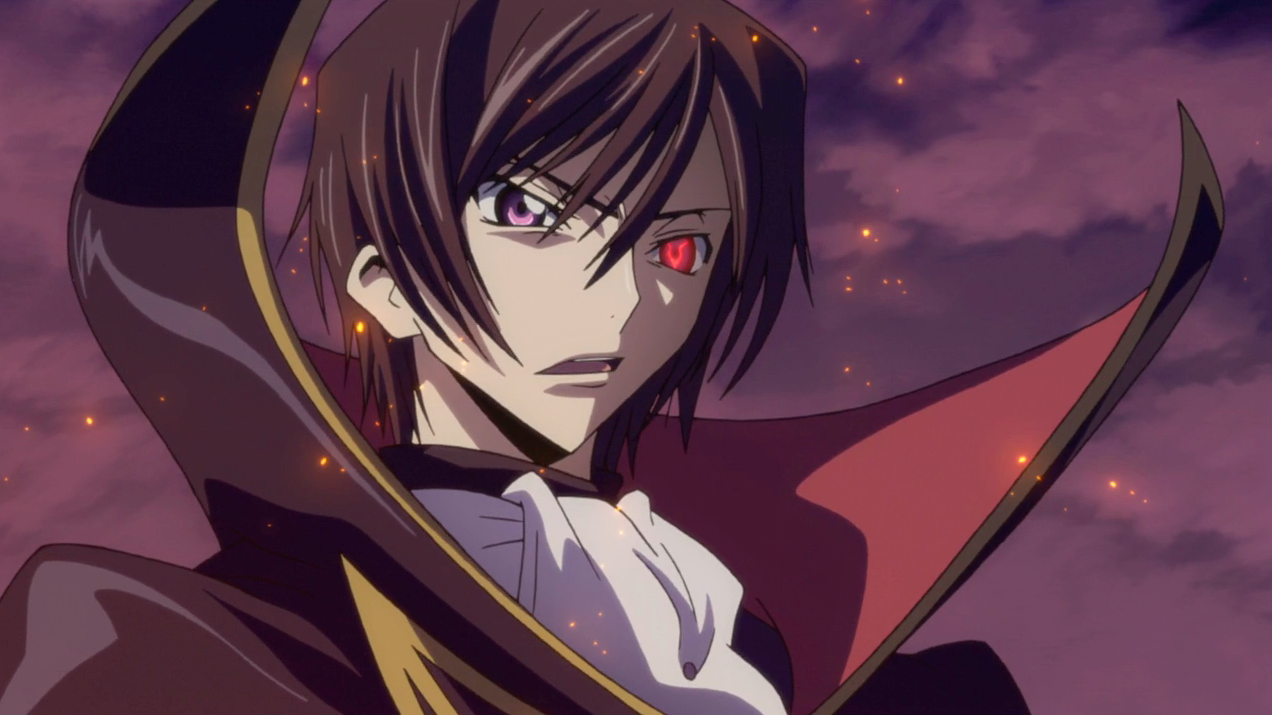 Code Geass is an iconic anime that is fun, weird and entertaining. I'd recommend it in this regard – don't let anyone tell you it's all intellectual or anything. If you want some light hearted enjoyment then it truly delivers, and this is something none of its problems can take away.
8/10