



Lion Quest 10 year anniversary
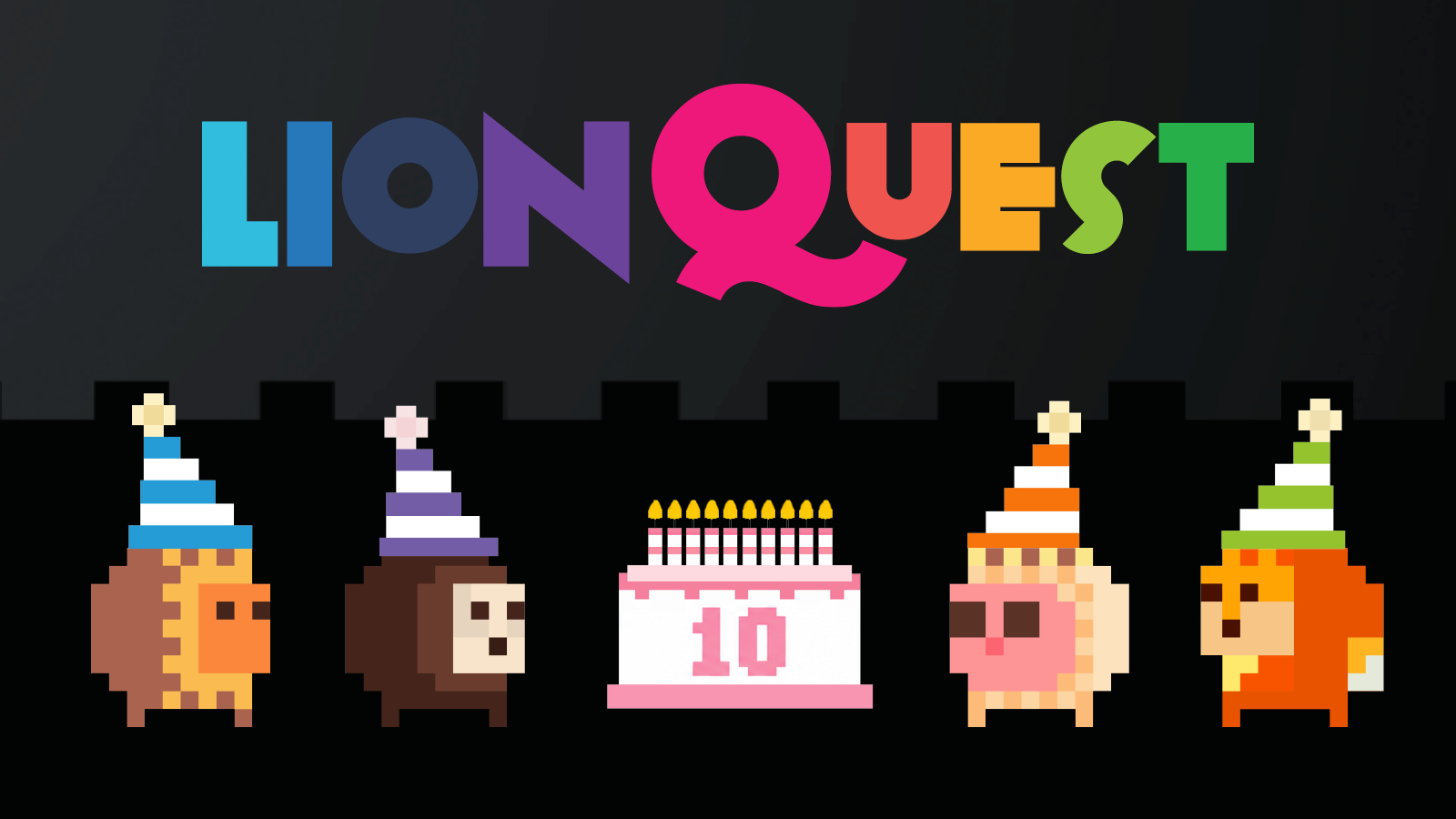 How the time flies by! 11th July 2016 – that was the date ten years ago when Lion Quest launched on Steam. To celebrate this milestone I'm doing a mini retrospect on the game, including a behind-the-scenes look at what it was like to make a game in the mid-2010s.
A minimalist aesthetic
Lion Quest was first developed with a minimalist cube aesthetic and it was using this art style that it originally went through Steam Greenlight. Back in the day, this was a voting system through which indie developers could get their game published on Steam.
The feedback I received here prompted me to develop the art further. This was around May 2015 and a few things had happened all at once. The game was 'Greenlit', meaning I was now officially working towards a Steam release. But I'd also been planning a handheld version for the PlayStation Vita and this had to be cancelled when it was announced that PSM (PlayStation Mobile – the pathway towards publishing an indie game on the Vita) was being shut down.
Learning to code
I made Lion Quest in Unity, and it was my first time programming in C#. A lot of design decisions were based around the fact that I didn't really know what I was doing. For instance, the title and level select were made as playable levels to circumnavigate the fact that I didn't know how to make menus. Ironically, over the two year dev cycle I figured menus out, so the released version of Lion Quest does also have menus for Lion Quest versus, arcade mode etc. Many effects work using off-screen contraptions that, aside from a trigger for activation, don't run any extra code, but instead operate as a sort-of invisible Rube Goldberg machine that leverages the same physics and gravity system used by the player. It's not the most optimised way of doing things for sure, but does give these effects a fairly unique cadence.
Lion Quest gets a story
New Year's Eve 2015. I showed the game to a friend who's sadly no longer with us. His feedback was clear, he wanted the game to have a story. In my mind I was pretty much done with Lion Quest but that conversation resulted in another 6 months work going into the game. I spent this time making a series of smaller levels that bookend the game. These are the five level tutorial and also the final section once you enter the red portal. Although I also added some dialogue at other points throughout the game, there's a lot more story at the start and end, and this is why. Being developed last is also why I think these levels are slightly better designed than those found in the middle section.
Post-Launch
Lion Quest has received a whole load of updates since its original release. This includes an improved camera and more responsive controls that make the moment-to-moment gameplay better now than when the game first launched. The Animal Maker was also added, making it possible to create a custom character.
The Future
Lion Quest received a 3D sequel called Lion Quest Infinity back in 2021. Meanwhile the 2D spirit of Lion Quest lives on in a new game I'm making called The Wizard of Gloss. It's a faster-paced game and it includes combat, upgrades, grind rails and a whole load of other things that I had no idea how to make ten years ago. Thematically I'm trying something new, but the game's design aesthetic still reveals the Lion Quest DNA underneath.
Find out more about The Wizard of Gloss by visiting its Steam page.